

10 Amazing Sundarbans Animals to Spot | Wildlife Guide

10 Amazing Sundarbans Animals to Spot | Wildlife Guide
Look beyond the tiger! Discover 10 incredible animals, birds, and reptiles in the Bangladeshi Sundarbans. Start your wildlife adventure with Take A Boat.
Everyone dreams of the Royal Bengal Tiger, but as a wildlife photographer who has spent countless seasons in the Bangladeshi Sundarbans, I can tell you the real magic lies in its astounding biodiversity. The forest is a living, breathing tapestry of creatures, each more fascinating than the last. So, grab your binoculars and camera! Here are 10 incredible Sundarbans animals to spot on your next adventure.
Table of Contents
- 10 Amazing Sundarbans Animals to Spot | Wildlife Guide
- 1. The Irrawaddy Dolphin
- 2. The Saltwater Crocodile
- 3. The Spotted Deer
- 4. The Oriental Pied Hornbill
- 5. The Masked Finfoot
- 6. The Water Monitor Lizard
- 7. The Wild Boar
- 8. The White-Bellied Sea Eagle
- 9. The Kingfisher Family
- 10. The Osprey
- A Wildlife Paradise Awaits
- Plan Your Sundarbans Wildlife Safari
1. The Irrawaddy Dolphin
This isn't your typical ocean dolphin! The Irrawaddy Dolphin is a rare freshwater species with a rounded head and a playful nature. Look for them in rivers' deeper channels and confluences, often in small pods. They are shy but can sometimes be seen surfacing for air.
Photography Tip: Use a telephoto lens and set your camera to a fast shutter speed to capture their brief moments above water. Our experienced Take A Boat guides know the exact channels where these elusive creatures are often seen playing.
2. The Saltwater Crocodile
The true ruler of the waterways. This ancient predator is the largest living reptile on Earth. You'll often spot them sunbathing on muddy banks, perfectly still, with their jaws open to regulate temperature.
Interesting Fact: They can grow up to 7 meters long and are incredibly powerful. Always observe from the safety of your boat!
3. The Spotted Deer
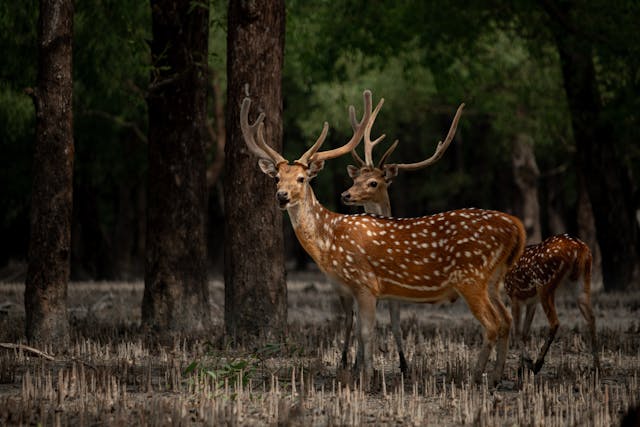
The most common and graceful mammal you'll encounter. Herds of Spotted Deer, or Chital, often graze near the riverbanks and in grassy clearings. They are a key prey species for the tiger.
Photography Tip: The soft morning light creates a beautiful glow on their spotted coats, making for stunning portraits.
4. The Oriental Pied Hornbill
You'll often hear this bird before you see it—its wings make a loud whooshing sound as it flies between trees. With its large, striking yellow and black casque (helmet), it's an unforgettable sight. Look for them in the canopy of taller trees, feasting on fruits.
5. The Masked Finfoot
The holy grail for birdwatchers! This critically endangered and timid bird is a master of camouflage. It prefers dense, tangled vegetation along quiet water channels. Spotting one requires patience and a sharp-eyed guide.
Interesting Fact: Its name comes from its unique lobed feet, perfect for swimming.
6. The Water Monitor Lizard
Don't be alarmed by this prehistoric-looking giant! Often mistaken for a Komodo dragon, the Water Monitor is a common sight, swimming across canals or lumbering along the banks. They can grow over 2 meters long and are primarily scavengers.
Photography Tip: Their forked tongues and scaly skin make incredible close-up shots.
7. The Wild Boar
These sturdy, resilient animals are a vital part of the forest ecosystem. They are often seen rooting in the mud with their powerful snouts and travel in sounders (groups).
Interesting Fact: They are another primary food source for the tiger, and their constant digging helps aerate the forest soil.
8. The White-Bellied Sea Eagle
Keep your eyes on the sky! This majestic bird of prey is a commanding presence. With a wingspan of up to 2 meters, it can often be seen perched high on a tree or soaring over the water, looking for fish.
Photography Tip: Capture it in flight against the vast sky for a powerful image of wilderness.
9. The Kingfisher Family
The Sundarbans is a kingdom of kingfishers. You'll likely see several species, from the common White-Throated Kingfisher to the stunning Black-Capped Kingfisher and the small, dazzling Common Kingfisher. They are often seen perched on low branches over the water, diving with lightning speed to catch fish.
10. The Osprey
Another magnificent fish-hunter, the Osprey is a winter visitor to the Sundarbans. It can be seen hovering over the water before plunging feet-first to snatch its prey.
Interesting Fact: Its toes are of unequal length and reversible outer toes, making it a perfectly designed fishing machine.
A Wildlife Paradise Awaits
The Sundarbans is a wildlife photographer's paradise, but you need a guide who knows where to look. The team at Take A Boat works with local experts who can read the forest's signs—a ripple in the water, an alarm call from a deer, a specific perch—to find these amazing creatures.
Plan Your Sundarbans Wildlife Safari
Inspired to capture these incredible animals yourself?
Book your Sundarban wildlife safari with Take A Boat. Our guides are experts at locating these species and will help you create a portfolio of unforgettable memories. Visit takeaboat.com to explore our tours.