
Sundarbans vs. Other Mangrove Forests: What Makes Bangladesh's Sundarbans Unique?


Sundarbans vs. Other Mangrove Forests: What Makes Bangladesh's Sundarbans Unique?
As a comparative travel analyst, I often study the world’s great natural wonders — but few ecosystems possess the sheer scale and cultural depth of the Sundarbans.
Table of Contents
- Sundarbans vs. Other Mangrove Forests: What Makes Bangladesh's Sundarbans Unique?
This UNESCO World Heritage Site, predominantly located in Bangladesh, is frequently compared with other global mangrove forests. However, a closer look reveals why the Bangladesh Sundarban’s uniqueness elevates it into a category of its own. It’s not just the largest single tract of mangrove forest on Earth — it’s a living, breathing landscape where man and nature coexist in a delicate, dynamic balance.
🐅 Iconic Wildlife: The Realm of the Royal Bengal Tiger
Most mangrove forests serve as critical nurseries for fish and birds, but the Sundarbans is the only one on Earth where an apex predator — the Royal Bengal Tiger — thrives in a saline, swampy environment.
Wildlife Comparison: Sundarbans vs. Other Mangroves
| Destination | Iconic Apex Predator/Wildlife | Key Differentiator |
|---|---|---|
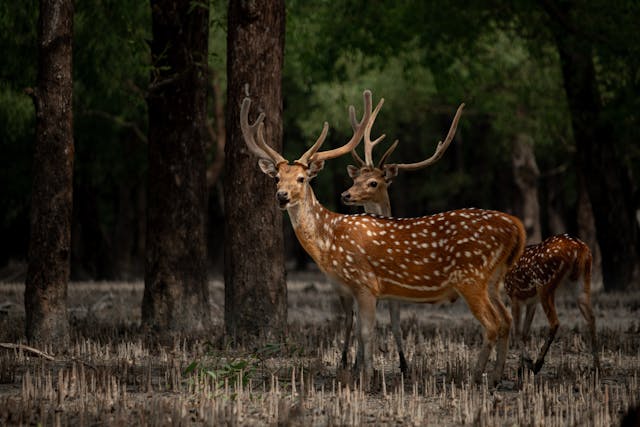
| Sundarbans (Bangladesh/India) | Royal Bengal Tiger (“Swamp Tiger”) | Only mangrove forest in the world with a wild tiger population adapted to swimming in saline waters. |
| Florida Everglades (USA) | American Alligator, Florida Panther (rare) | Primarily a freshwater/sawgrass marsh; mangroves are coastal fringes only. |
| Amazon Mangroves (Brazil) | Monkeys, Sloths, Aquatic Birds, Crocodiles | Focused on riverine and aquatic biodiversity — no apex feline predator. |
| Mangroves of Borneo (Southeast Asia) | Proboscis Monkey, Estuarine Crocodile | Rich primate life, but no large feline predator. |
The presence of the tiger transforms the Sundarbans into something far more intense and adventurous. This alone is one of the core features that make the Sundarbans unique.
🌊 Vastness and Landscape: A Delta of Immense Scale
When comparing Sundarbans vs. other mangroves, scale is the defining factor.
While regions like the Everglades are extensive, they form part of broader freshwater systems. The Sundarbans, by contrast, is the largest contiguous mangrove forest in the world — a massive tidal delta formed by the Ganges, Brahmaputra, and Meghna rivers.
Ecosystem Comparison
| Destination | Type of Ecosystem | Key Landscape Feature |
|---|---|---|
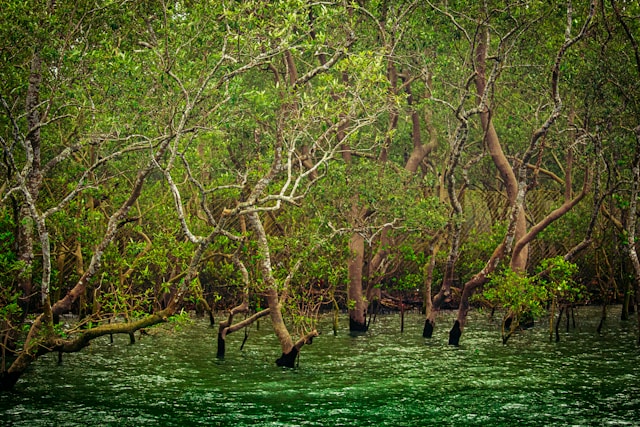
| Sundarbans (Bangladesh) | Largest Tidal Halophytic Mangrove Forest | Intricate network of thousands of tidal creeks and mudflats, reshaped constantly by the tides. |
| Florida Everglades | Subtropical Wetland | Shallow “River of Grass” with coastal mangrove edges. |
| Borneo Mangroves | Coastal/Riverine Mangrove | Narrow, fragmented mangrove belts along coasts and rivers. |
Around 60% of the entire Sundarban delta lies within Bangladesh, covering approximately 10,000 sq km. Its interior — largely inaccessible — protects an extraordinary range of biodiversity, much of it still unexplored.
🪶 Cultural Depth: The Mythology of Bonbibi
Among the unique human dimensions of the Sundarbans is its deep-rooted cultural belief system — the legend of Bonbibi, the Lady of the Forest.
Both Hindus and Muslims revere Bonbibi as a guardian spirit who protects honey collectors, woodcutters, and fishers from the dangers of the tiger and the jungle. Before entering the deep forest, locals perform rituals seeking her blessing and forgiveness.
This shared, syncretic spiritual tradition forms a remarkable bridge between religion, ecology, and survival. Other mangrove regions around the world may sustain livelihoods, but none share this kind of living mythology that binds community and conservation so tightly.
The people of the Sundarbans don’t conquer nature — they negotiate with it.
🌏 Conclusion: An Expedition into the Unparalleled Wild
The Sundarbans vs. other mangroves comparison proves that this delta is far more than a vast forest of salt-tolerant trees.
It’s an ecosystem of titanic scale, shaped by tides and rivers, home to swimming tigers, and protected by ancient folklore. Its uniqueness lies in this powerful intersection of wildness, culture, and endurance.
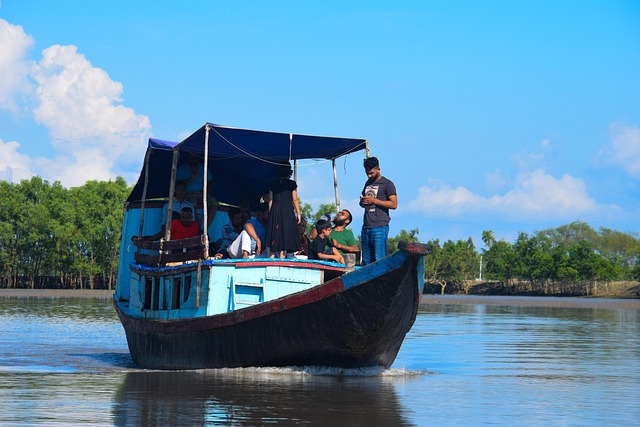
To truly experience its raw beauty — to hear a boat glide through tidal creeks where a tiger’s pawprint still lingers, to watch honey collectors whisper prayers to Bonbibi — one must venture deep into its heart.
🚤 Explore the Wild with Take A Boat
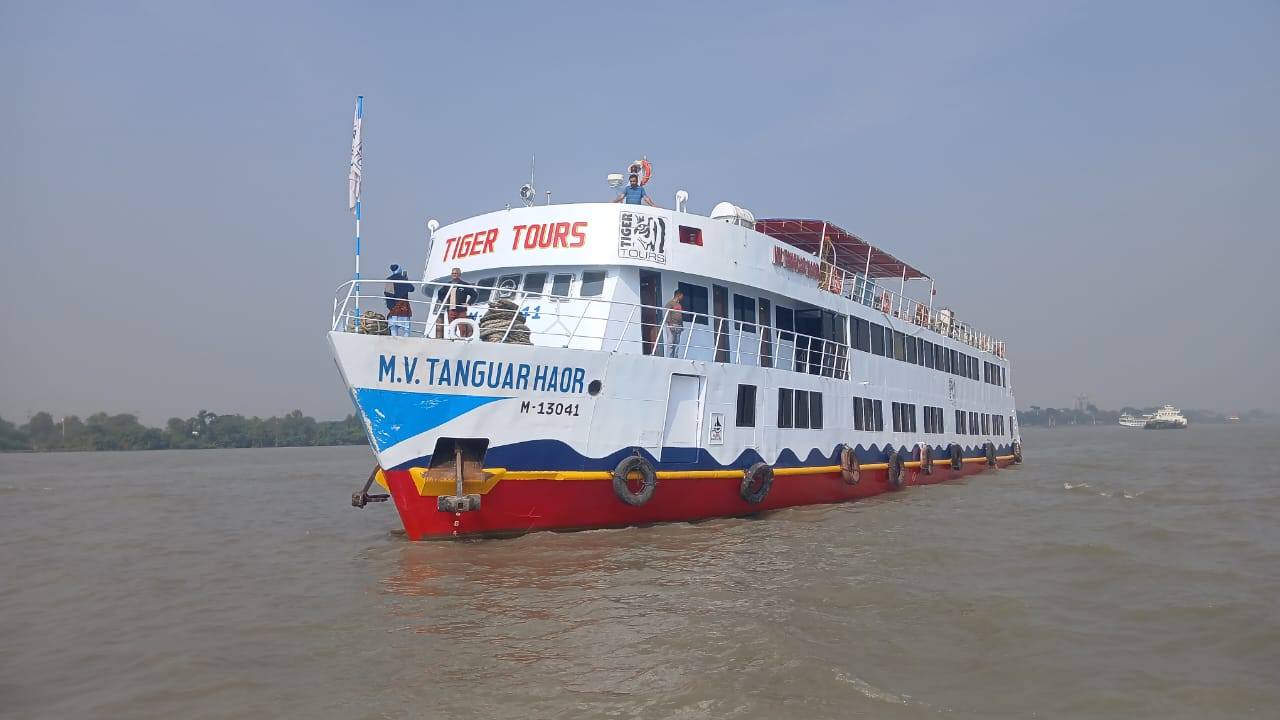
Take A Boat curates authentic expeditions into the Bangladeshi Sundarbans, guided by local experts who understand its tides, wildlife, and sacred traditions.
Don’t just visit a mangrove forest — join an expedition into the world’s last great wild delta.